The
Problem
Finding student housing from abroad is high-risk and emotionally taxing. Tenants face fragmented platforms, unverified listings, and unclear next steps—making it hard to trust what they see or confidently move forward with a booking.
Critical Diagnosis
10+
Students typically compare multiple apps and websites before trusting a single listing.
Platform check
70%
Overwhelming filters, inconsistent details, and poor information hierarchy lead to drop offs.
decision fatigue
0%
Most platforms delay or hide verification, pricing clarity, and landlord credibility.
trust assurance upfront
High
Lack of guidance between "interest" and "action" causes stalled or abandoned bookings
anxiety before booking
Audit
Findings
We audited the existing tenant experience across discovery, listing comparison, and booking initiation. The review revealed critical breakdowns in trust signals, information clarity, and flow continuity—especially for users searching from abroad.
Overloaded search & filter
Filters and listing attributes are dense, inconsistently labeled, and visually deprioritized.
SEVERITY
impact
High cognitive load during early discovery leads to shallow comparison and early drop-off.
Fragmented trust signals
Verified status, pricing clarity, and landlord credibility are inconsistently surfaced across screens.
SEVERITY
impact
Users hesitate to move forward, cross-check externally, or abandon listings entirely.
Unclear path to booking
After viewing a listing, next steps are ambiguous and often push users off-platform.
SEVERITY
impact
Users struggles to convert intent into action, resulting in incomplete or delayed bookings.
low emotional reassurance
Imagery, copy, and layout fail to communication safety in a high stakes decision.
SEVERITY
impact
International students feel anxious, especially when committing without physical visits.
Trust Visibility
FAIL
Decision Guidance
FAIL
Progressive Disclosure
PARTIAL
Critical issues
The
Solution
The solution redefines the tenant journey around clarity, trust, and momentum. Key decisions are supported through visible verification, guided discovery, and a linear booking flow—helping users move from interest to commitment without confusion or unnecessary friction.
01
guided discovery
Clear, location-first onboarding and simplified filters reduce early cognitive load and help users focus on relevant listings faster.
02
Trust made Visible
Verified badges, pricing clarity, and landlord credibility indicators are surfaced at key decision points—not buried across screens.
03
Linear path to booking
A clear progression from listing → details → chat → booking creates a predictable mental model for first-time renters.
04
progressive disclosure
High-stakes requirements (documents, proof of funds) appear only after booking intent is established, reducing early anxiety.
05
Emotional Reassurance
Copy, visuals, and layout reinforce safety and confidence—especially for international students booking remotely.
06
reduced decision friction
Content grouping, visual hierarchy, and clear CTAs help users move from comparison to action without second guessing
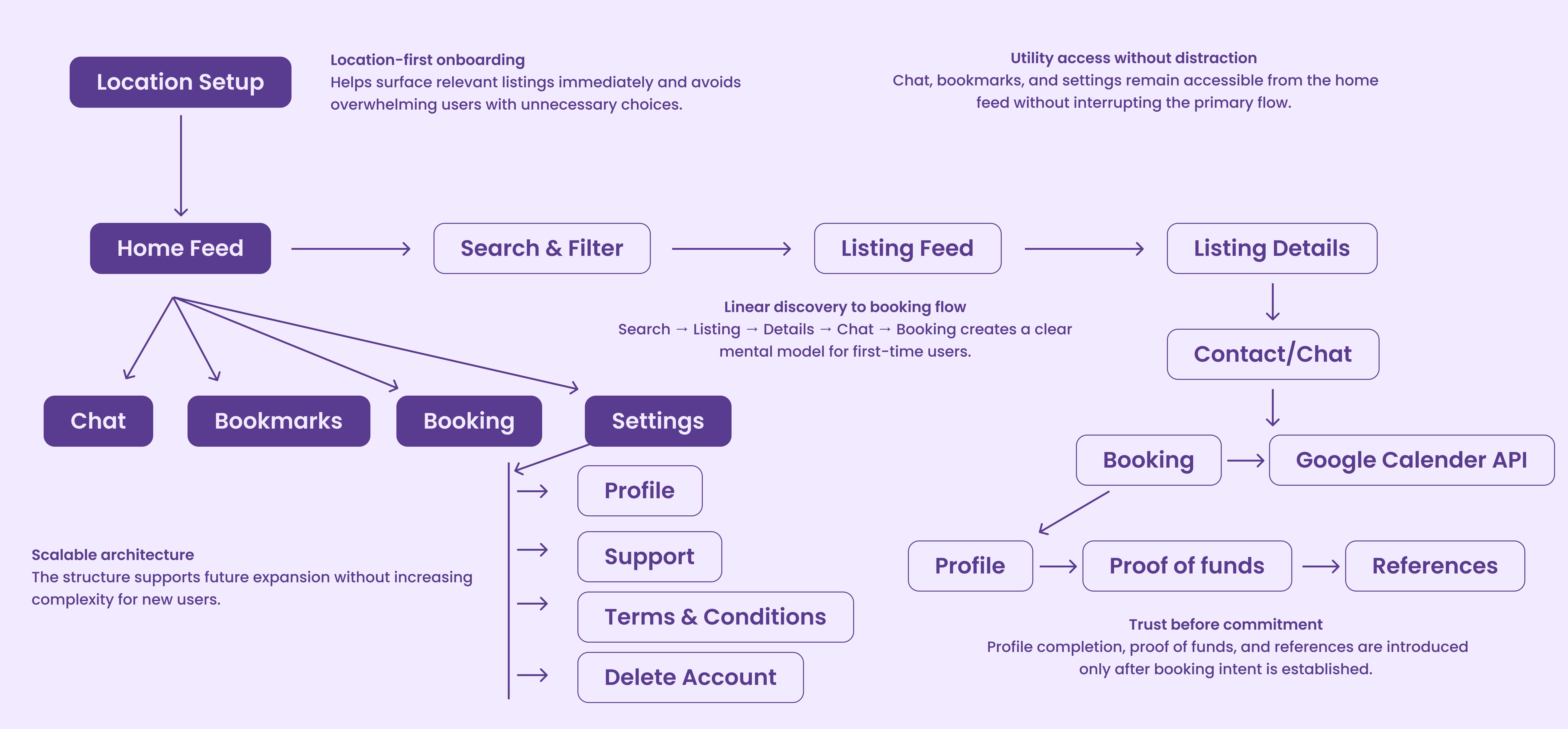
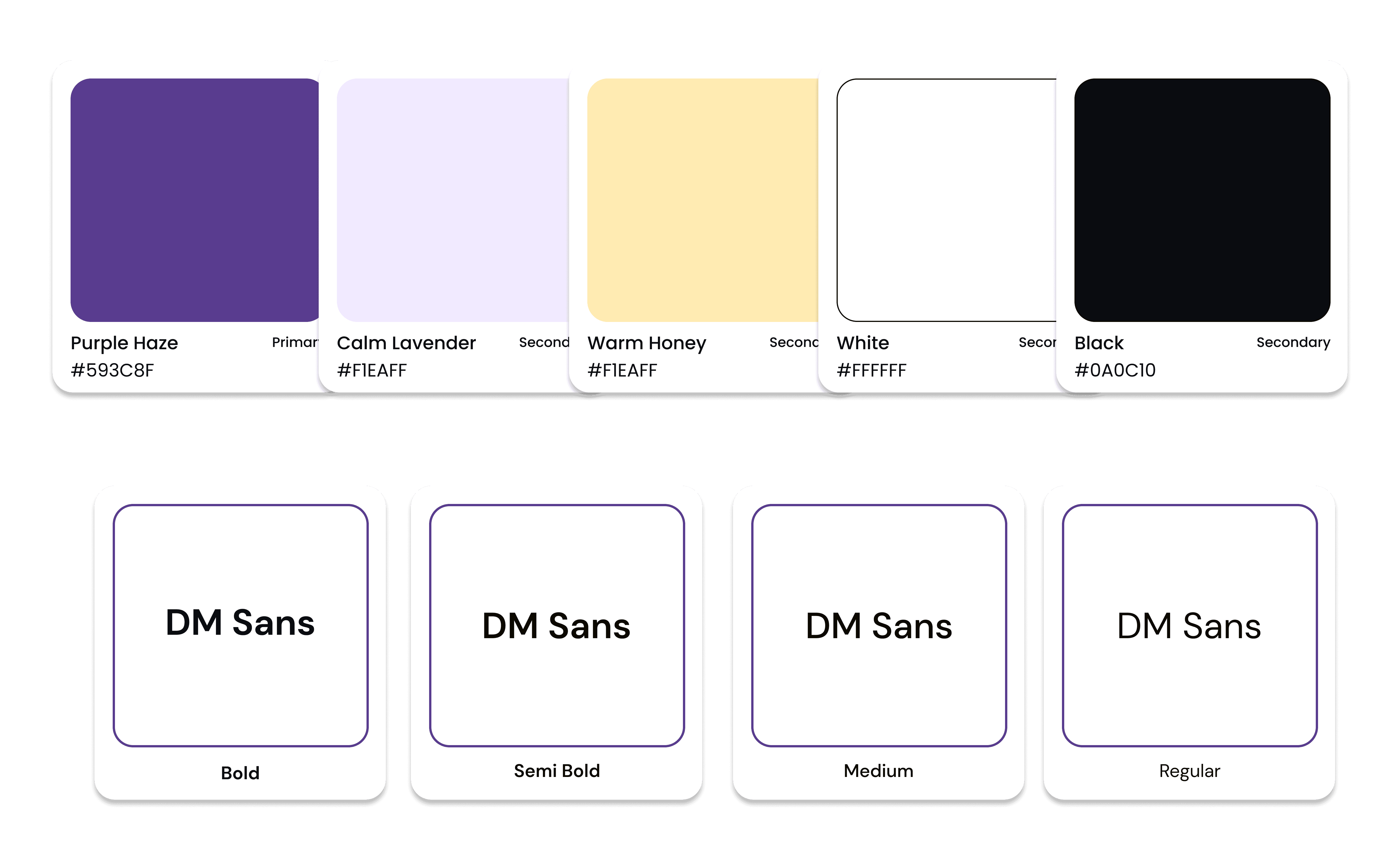
Information Architecture for Tenant Flow & Visual language
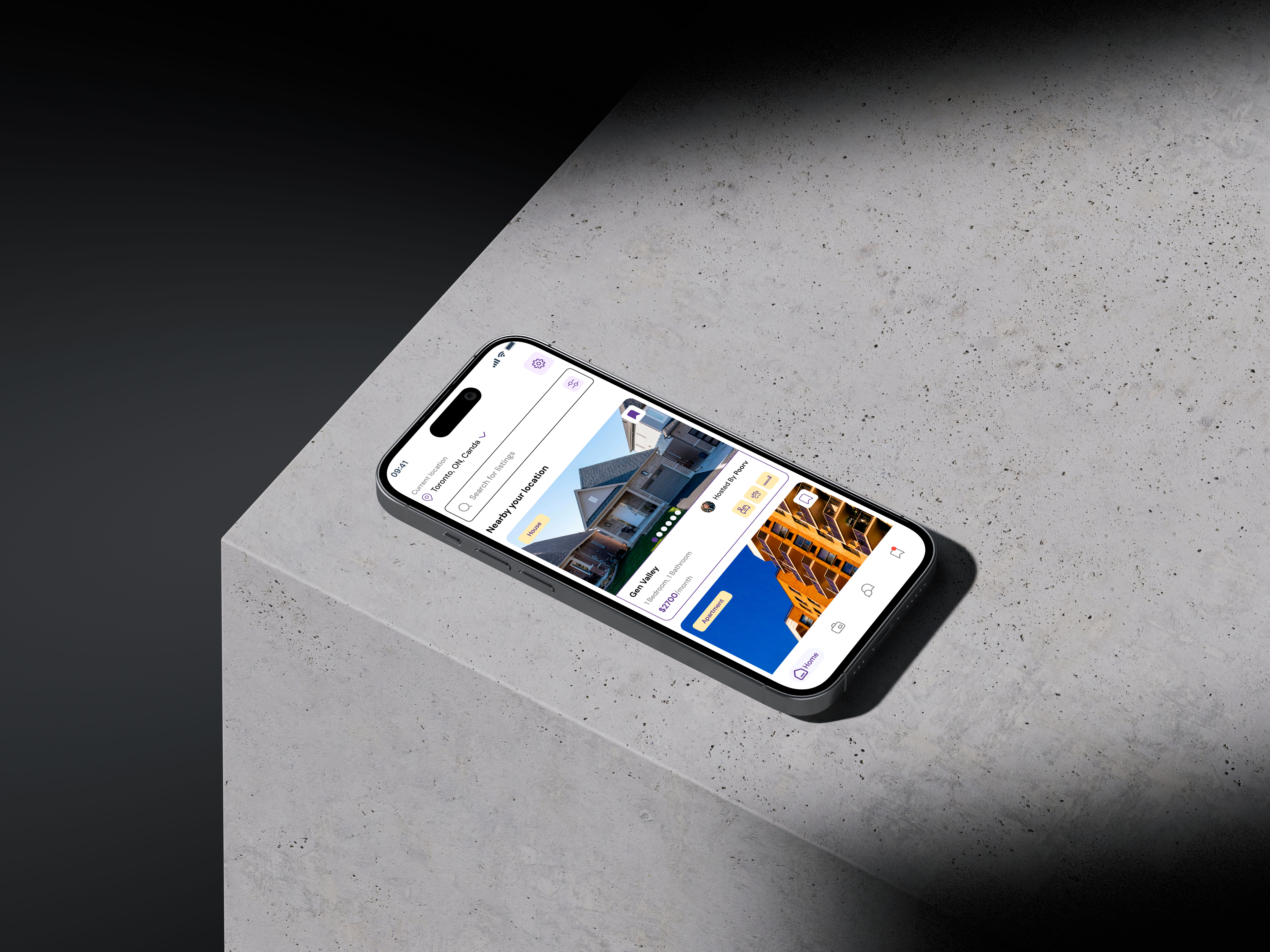
This flow illustrates how international students navigate GharMates from location setup to booking through a clear, linear structure designed to reduce uncertainty and build trust in high-stakes rental decisions.
Design Flow
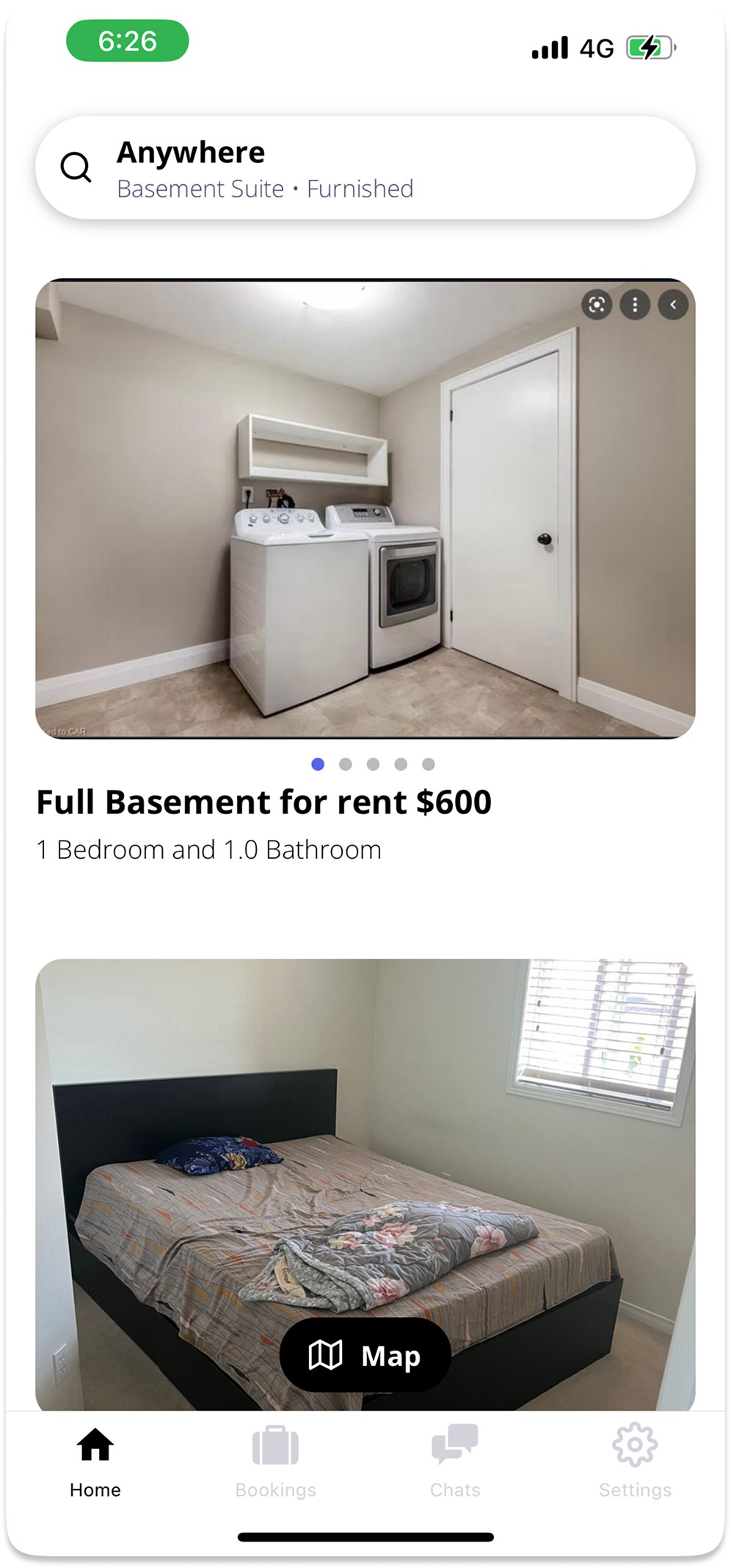
Fragmented discovery with high cognitive load and unclear progression
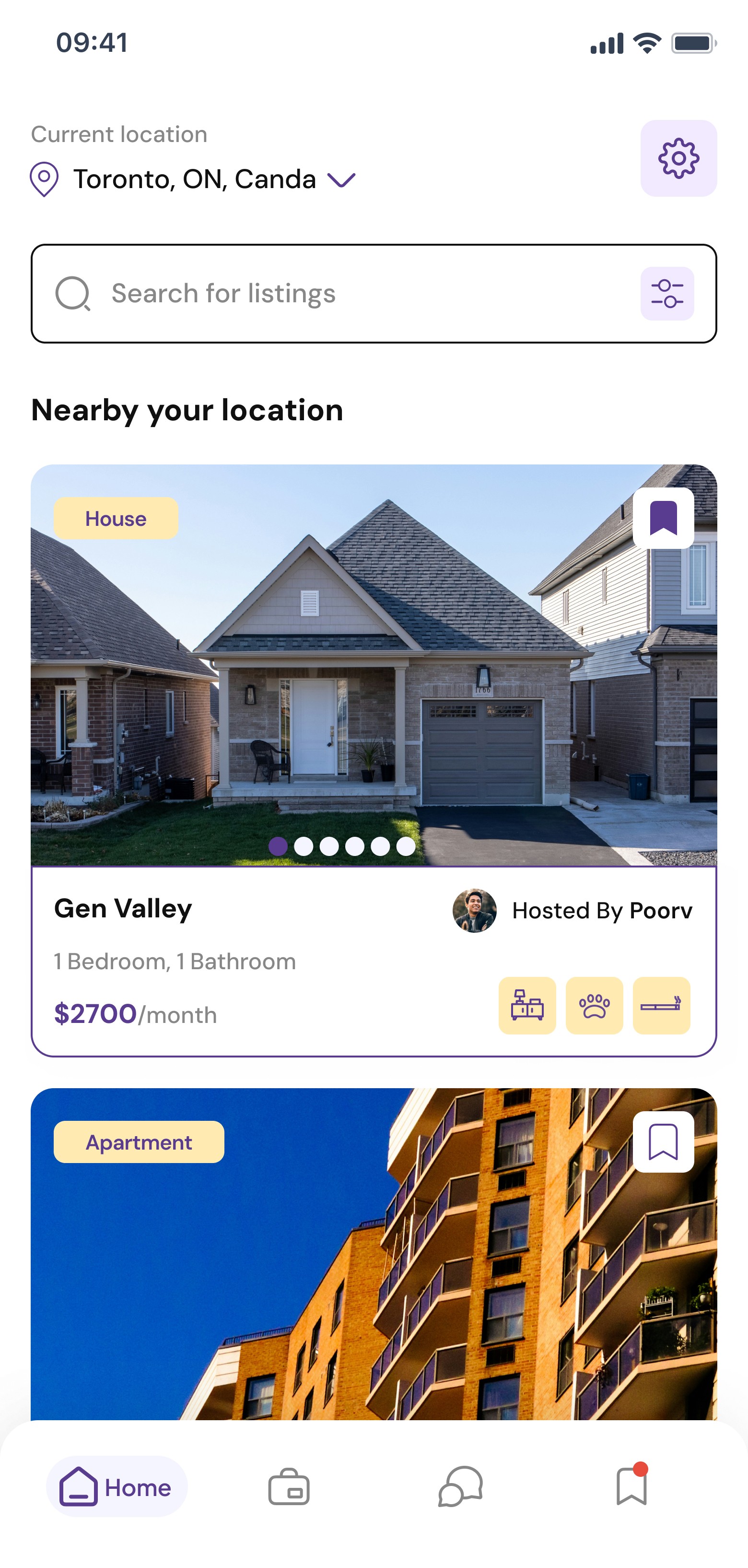
Structured, trust-led discovery that guides users towards confident
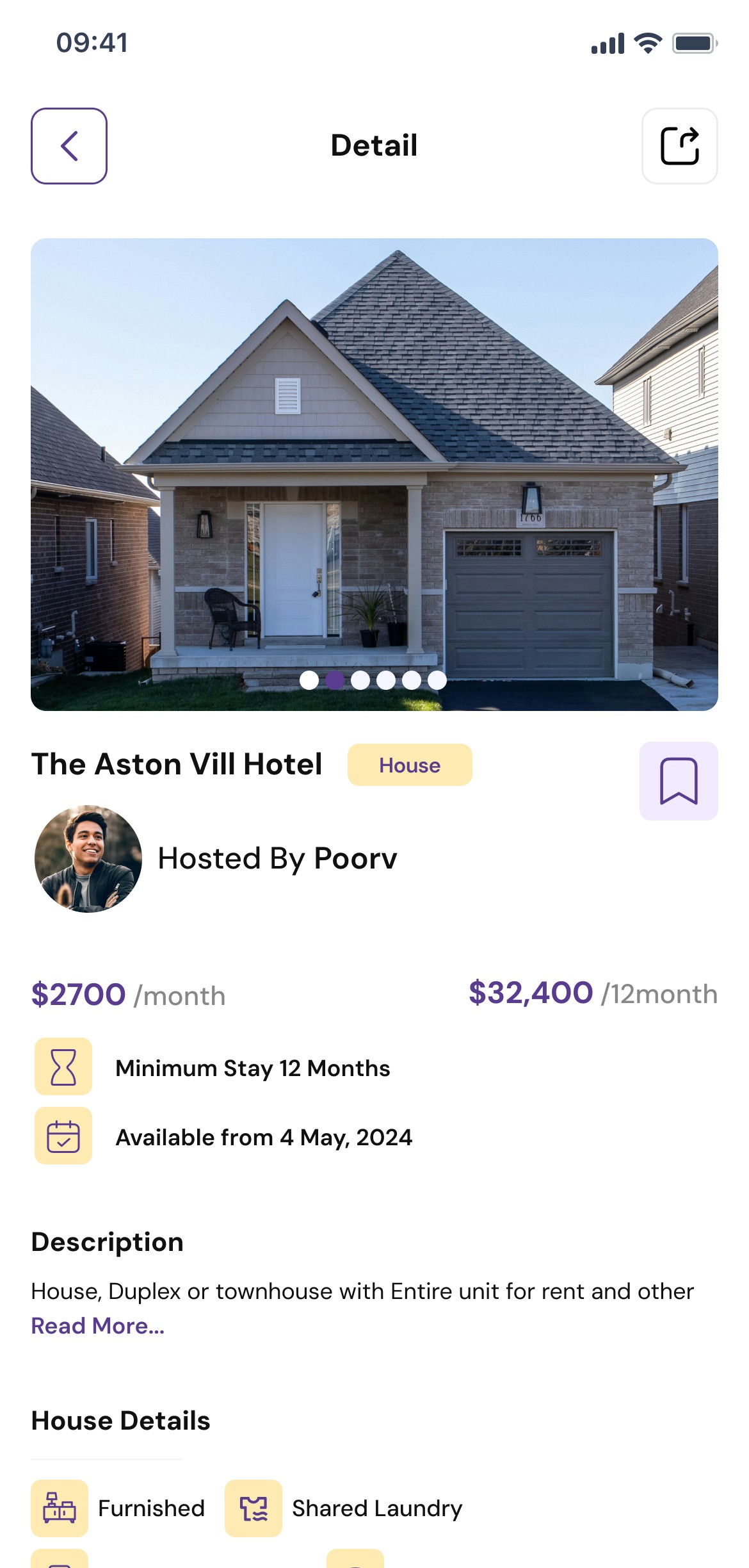
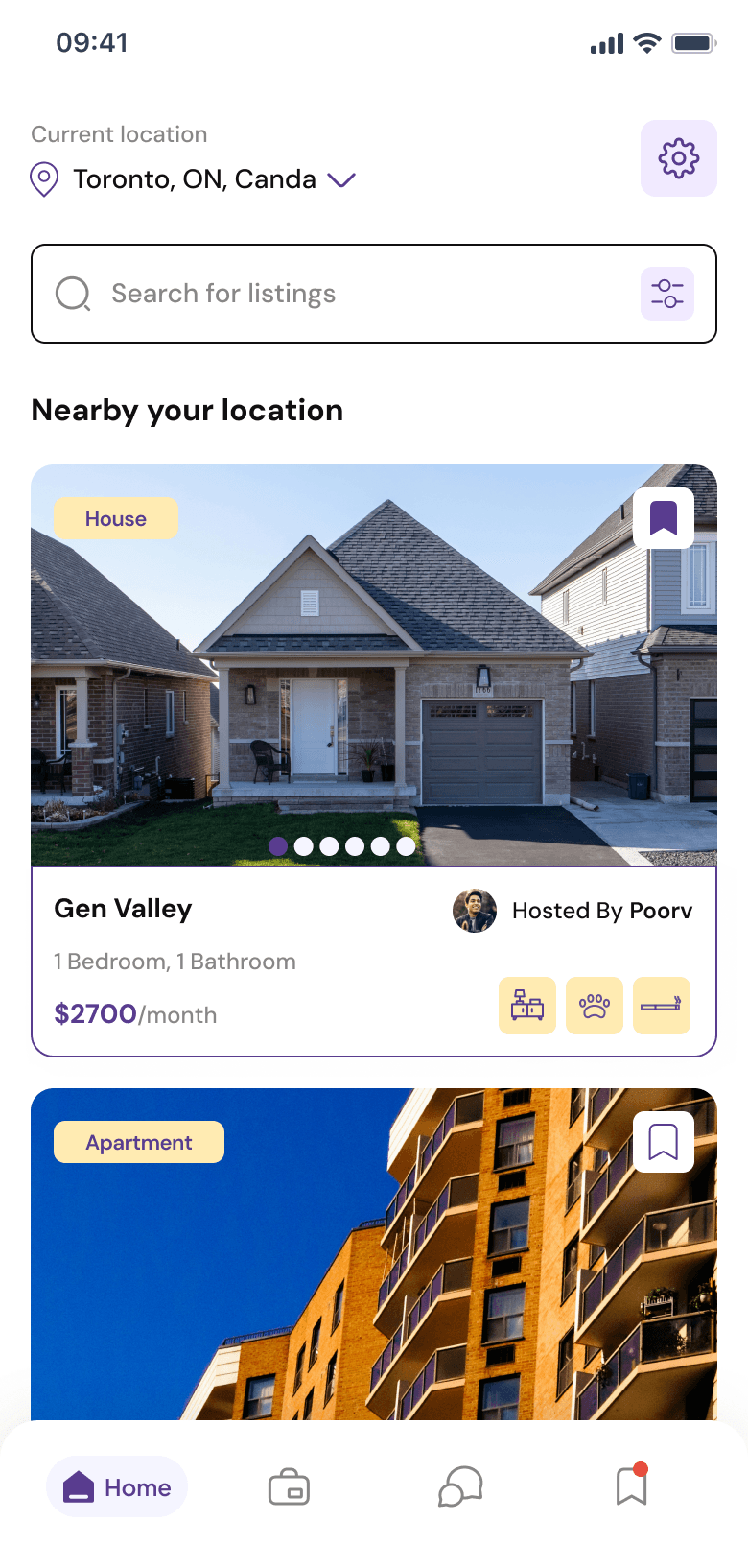
This flow illustrates how international students navigate GharMates from location setup to booking through a clear, linear structure designed to reduce uncertainty and build trust in high-stakes rental decisions.
Location-first home feed surfaces relevant listings early, reducing uncertainty and decision fatigue for first-time users.
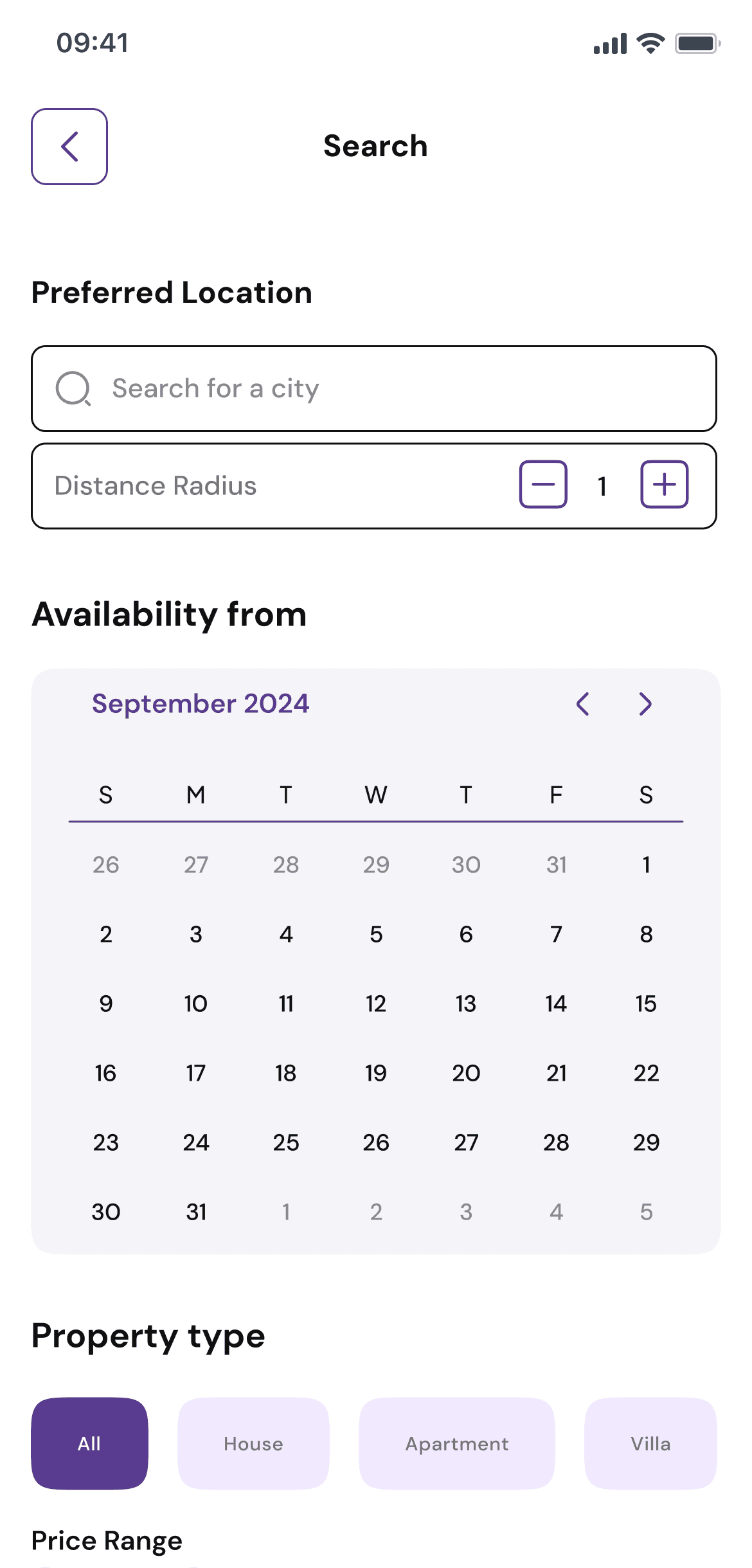
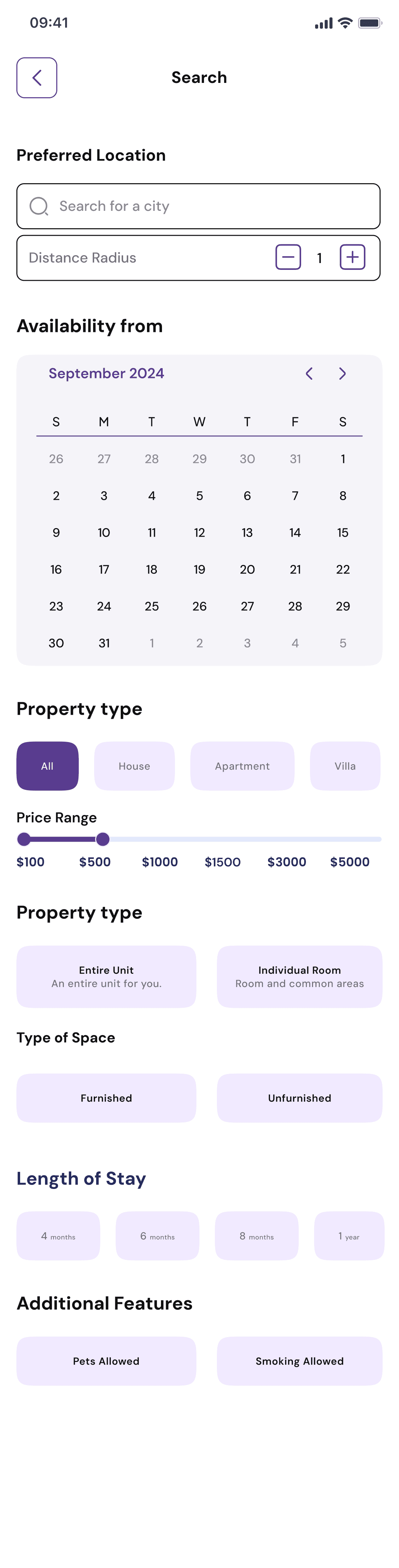
Clear, structured filters and calendar-based availability help users narrow options without overwhelming them.
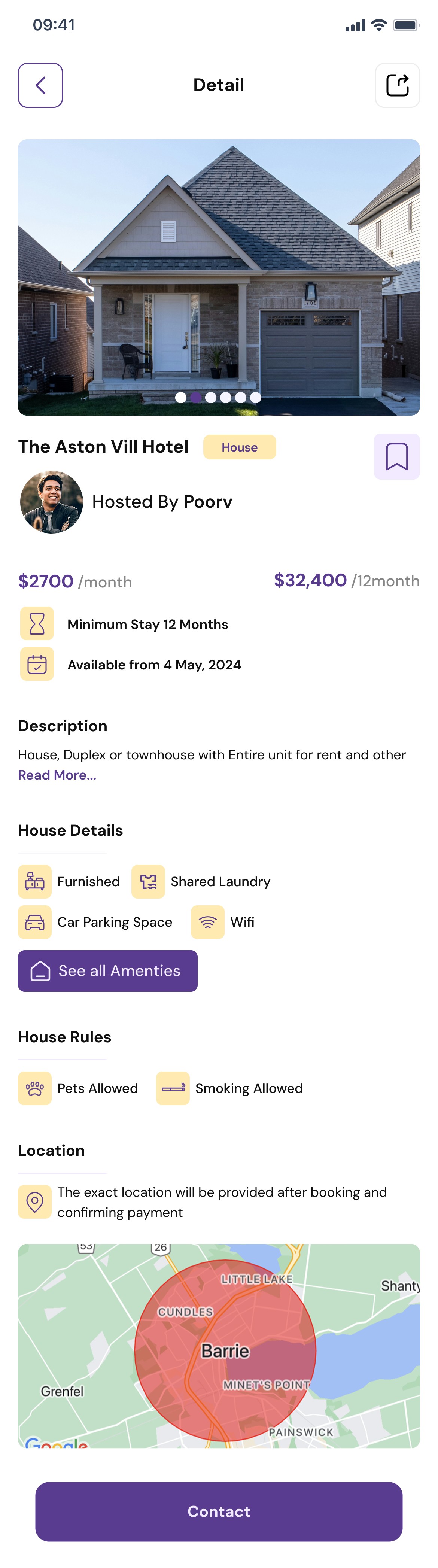
Property details, pricing, and rules are grouped for quick comparison and confident evaluation.
Critical information and contact actions are surfaced only when intent is clear, reinforcing trust before commitment
Trust mechanisms were intentionally introduced only after booking intent was established to avoid overwhelming first-time users while still meeting landlord requirements.
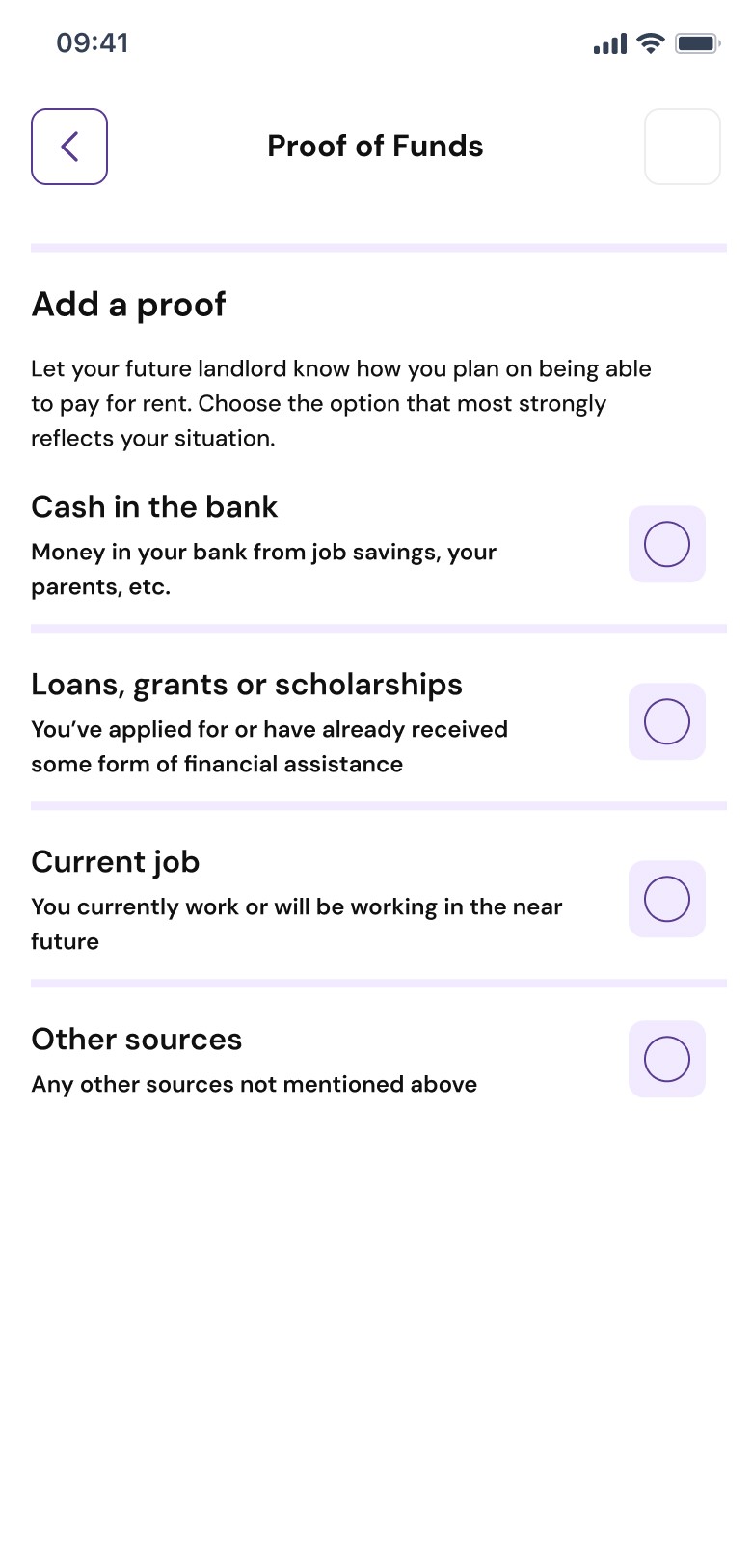
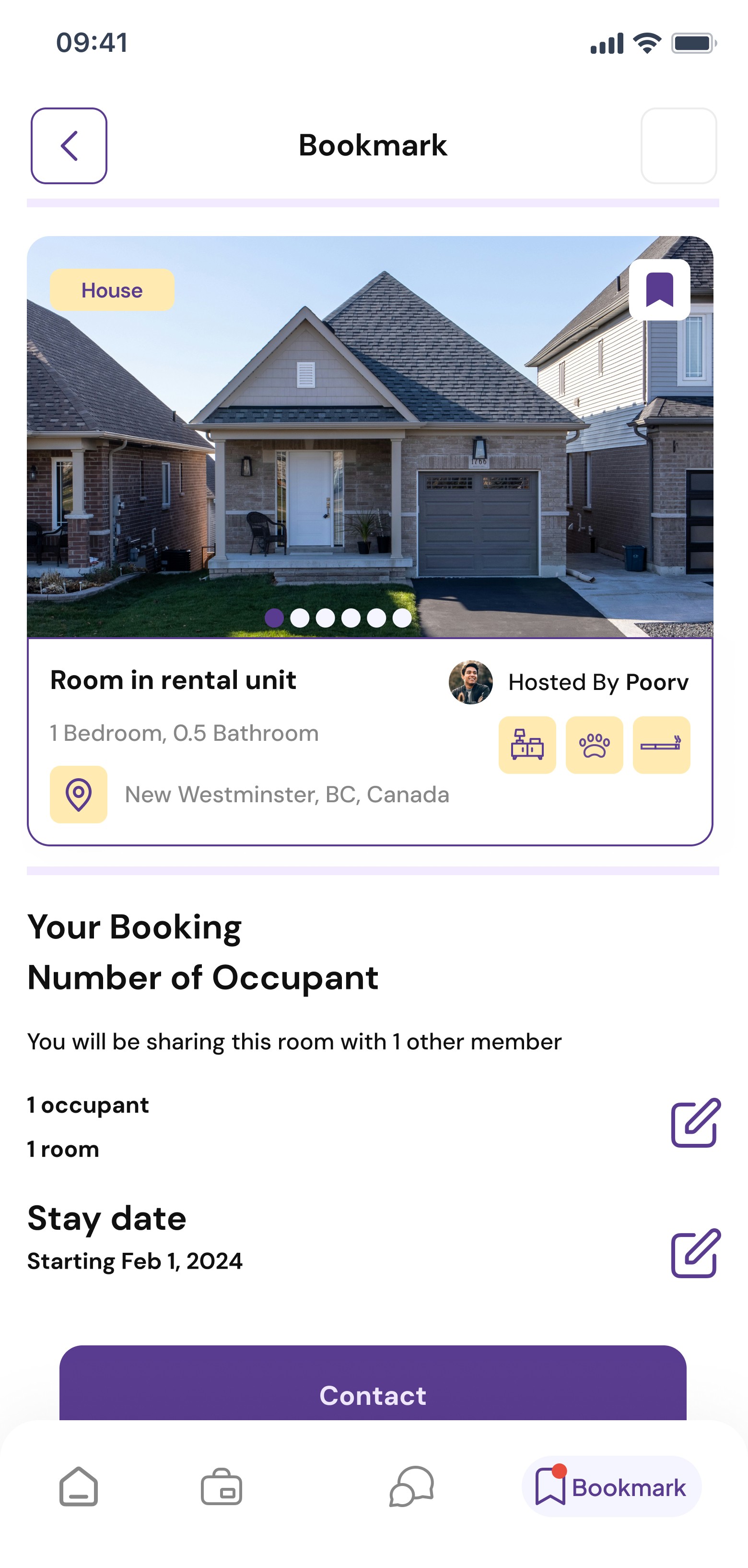
Shortlisted properties allow users to pause, compare, and return with confidence—supporting deliberate decision-making in a high-stakes rental flow.
The screen itself communicates the intent. The section-level text already explains why this exists.
OUTCOME & IMPACT — TENANT EXPERIENCE
Refining the tenant journey around clarity, trust, and progressive disclosure reduced decision friction and improved confidence during high-stakes rental flows.
+42%
Clearer flows and visible next steps helped users act with confidence.
Higher conversion momentum
Progression from listing view → booking intent
2.8×
Improved search structure enabled meaningful comparison instead of shallow browsing.
Deeper exploration
Listings viewed per session
35%
Reduced hesitation by surfacing trust signals only when intent was clear.
Faster decision making
35% faster time to first contact
Landlord
CONDÉ NAST // CURATED DISCOVERY ENGINE // CASE STUDY 01 // PLATFORM ARCHITECTURE //
CONDÉ NAST // CURATED DISCOVERY ENGINE // CASE STUDY 01 // PLATFORM ARCHITECTURE //
CONDÉ NAST // CURATED DISCOVERY ENGINE // CASE STUDY 01 // PLATFORM ARCHITECTURE //
CONDÉ NAST // CURATED DISCOVERY ENGINE // CASE STUDY 01 // PLATFORM ARCHITECTURE //
CONDÉ NAST // CURATED DISCOVERY ENGINE // CASE STUDY 01 // PLATFORM ARCHITECTURE //
CONDÉ NAST // CURATED DISCOVERY ENGINE // CASE STUDY 01 // PLATFORM ARCHITECTURE //
CONDÉ NAST // CURATED DISCOVERY ENGINE // CASE STUDY 01 // PLATFORM ARCHITECTURE //
CONDÉ NAST // CURATED DISCOVERY ENGINE // CASE STUDY 01 // PLATFORM ARCHITECTURE //
Tenant UX // Housing Search //Booking Flow // Student Rentals //
6mins Read // Curated discovery //Booking Flow // Student Rentals //
BROKEN WORKFLOWS
Landlord-facing rental platforms prioritize listings, but fail to support decision-making. As inquiries scale, tenant intent fragments across chats, calls, and external tools, forcing landlords to manually reconstruct context before acting.
06
Inquiries, availability, and seriousness are spread across messages, making it difficult to distinguish browsing from real intent.
Scattered tenant Intent
06
Scheduling calls, confirming availability, and tracking follow-ups rely on external calendars and ad-hoc communication.
Manual coordination overload
06
Proof of funds, references, and tenant readiness arrive too late—or not at all—forcing landlords to chase clarity.
Late trust signals
06
Without a clear system to prioritize requests, landlords delay responses or default to off-platform coordination.
Decision fatigue
Design Flow
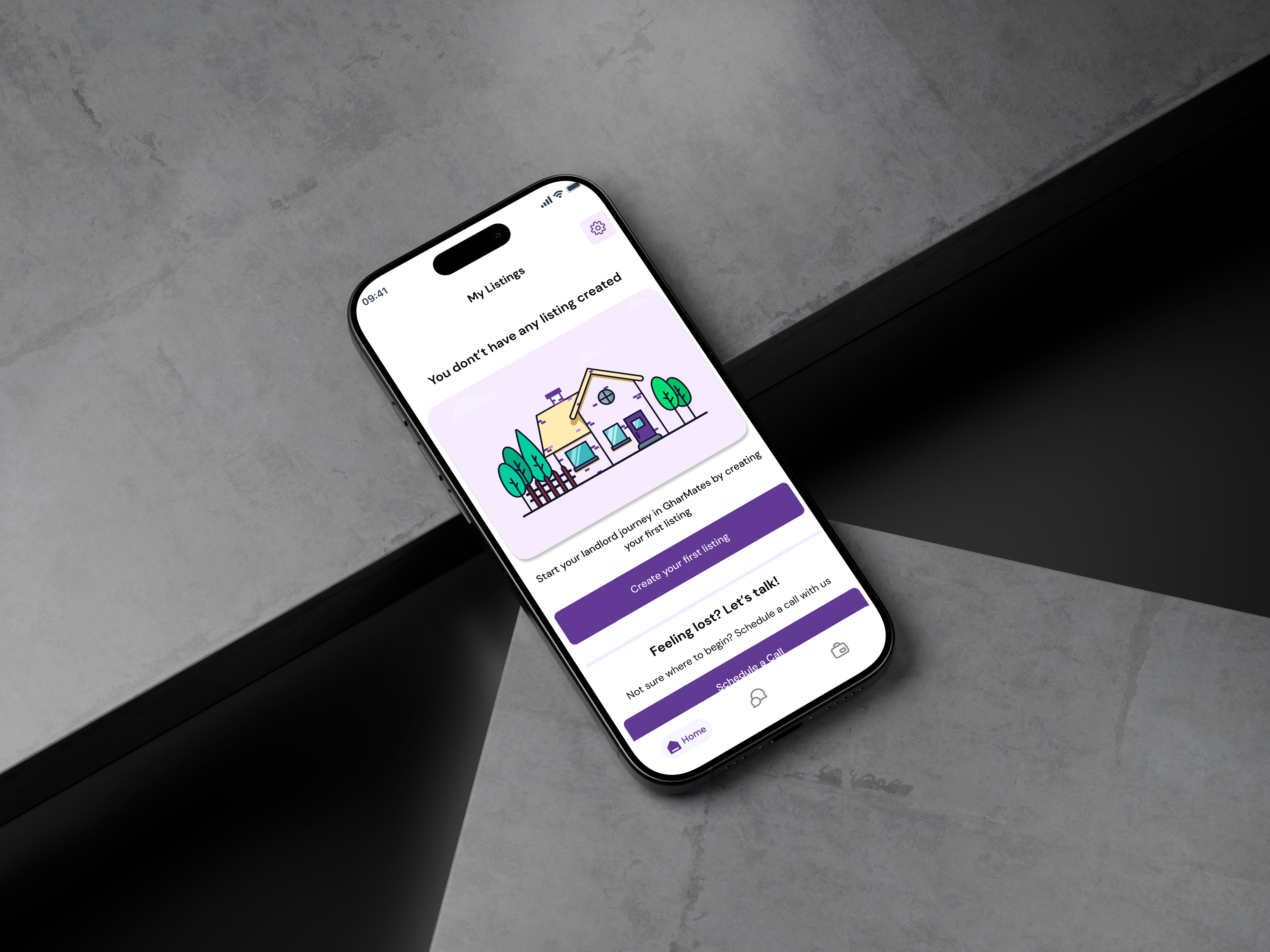
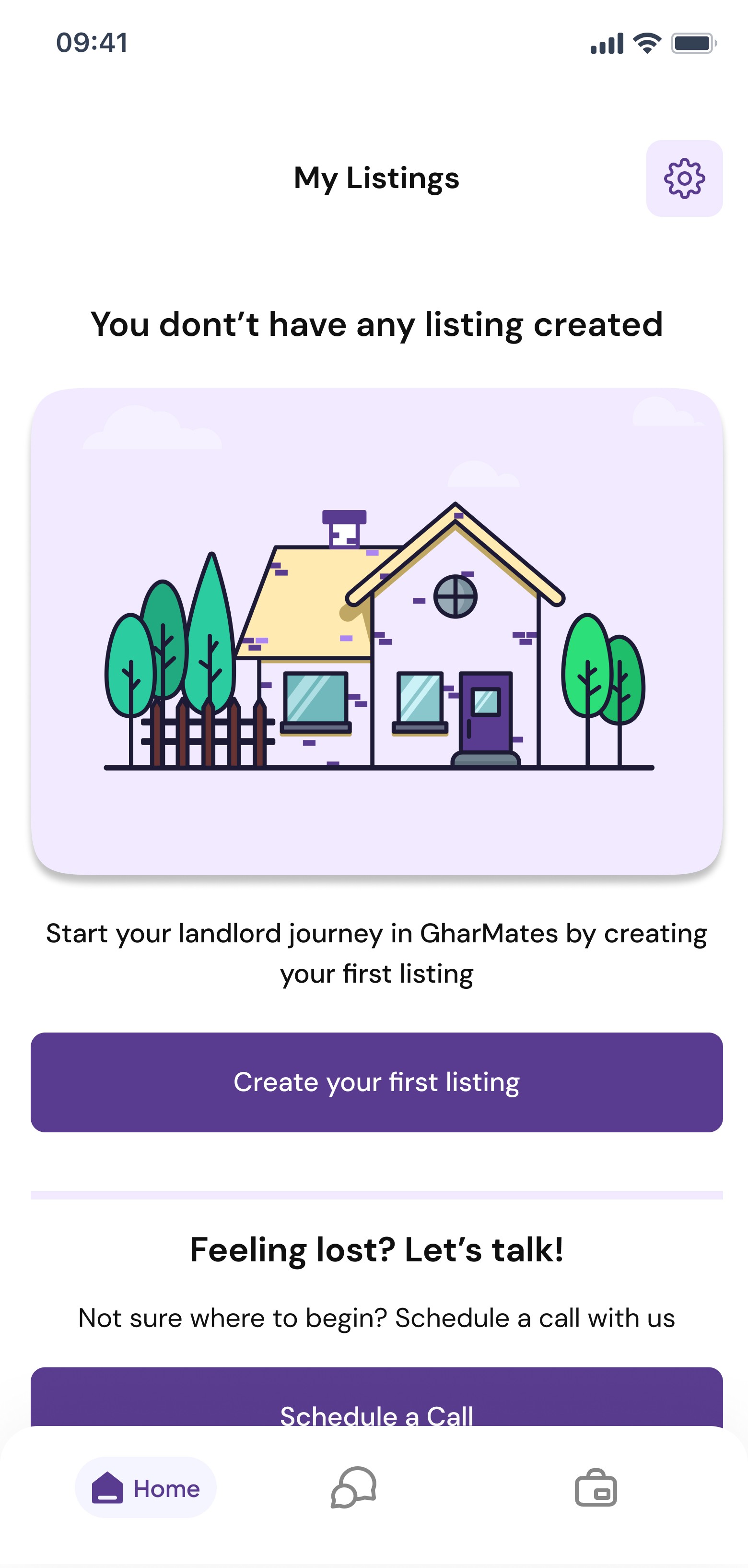
This flow illustrates how landlords move from first-time onboarding to publishing a complete, high-quality listing through a guided, task-focused setup. The structure prioritizes clarity, reduces manual coordination, and ensures essential property details are captured without overwhelming first-time hosts
A clear empty state guides first-time landlords toward creating their first listing, reducing hesitation and accelerating activation without overwhelming setup decisions.
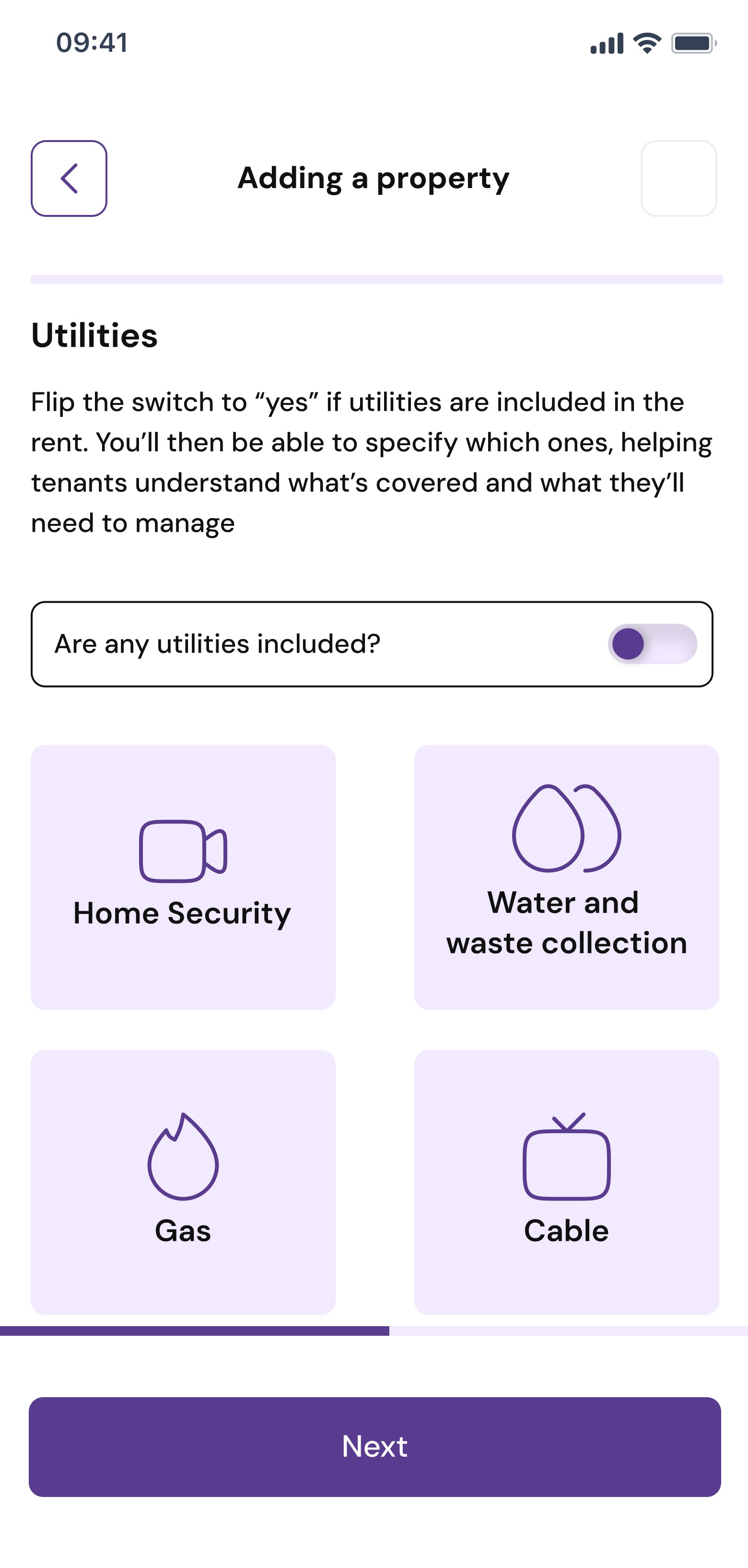
Core property details such as utilities are captured through structured inputs, helping landlords define expectations clearly while keeping the setup process lightweight and predictable.
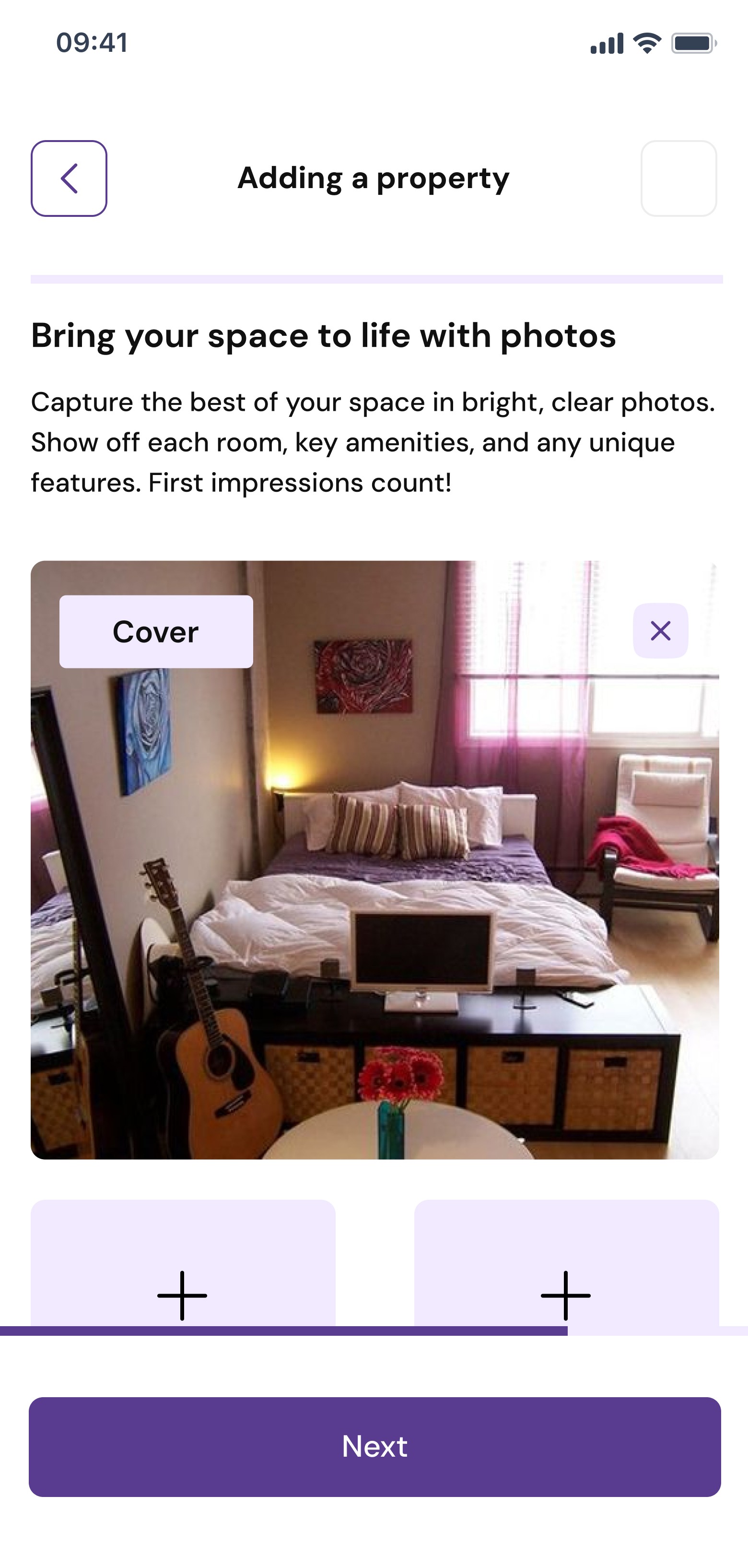
Visual context is introduced after foundational details are set, allowing landlords to strengthen listing credibility and appeal without disrupting the primary setup flow.
Design Flow

OUTCOME & IMPACT — LANDLORD EXPERIENCE
Structuring landlord workflows around intent, readiness, and task completion improved decision speed, reduced coordination effort, and enabled more confident listing management.
38%
Clear tenant intent and readiness signals reduced ambiguity, allowing landlords to act quickly without repeated clarification.
faster decision making
time to first meaningful response
2.4×
Intent-based flows helped surface serious tenants over casual browsers, improving the signal-to-noise ratio in inbound requests.
higher quality inquiries
qualified tenant requests per listing
45% Fewer
Reduced aIn-flow scheduling and contextual communication reduced dependency on external calls, messages, and calendars. by surfacing trust signals only when intent was clear.
Streamlined coordination
manual follow-ups outside the platform
Gharmates (Tenant)
CONDÉ NAST // CURATED DISCOVERY ENGINE // CASE STUDY 01 // PLATFORM ARCHITECTURE //
CONDÉ NAST // CURATED DISCOVERY ENGINE // CASE STUDY 01 // PLATFORM ARCHITECTURE //
CONDÉ NAST // CURATED DISCOVERY ENGINE // CASE STUDY 01 // PLATFORM ARCHITECTURE //
CONDÉ NAST // CURATED DISCOVERY ENGINE // CASE STUDY 01 // PLATFORM ARCHITECTURE //
CONDÉ NAST // CURATED DISCOVERY ENGINE // CASE STUDY 01 // PLATFORM ARCHITECTURE //
CONDÉ NAST // CURATED DISCOVERY ENGINE // CASE STUDY 01 // PLATFORM ARCHITECTURE //
CONDÉ NAST // CURATED DISCOVERY ENGINE // CASE STUDY 01 // PLATFORM ARCHITECTURE //
CONDÉ NAST // CURATED DISCOVERY ENGINE // CASE STUDY 01 // PLATFORM ARCHITECTURE //
Tenant UX // Housing Search //Booking Flow // Student Rentals //
6mins Read // Curated discovery //Booking Flow // Student Rentals //